
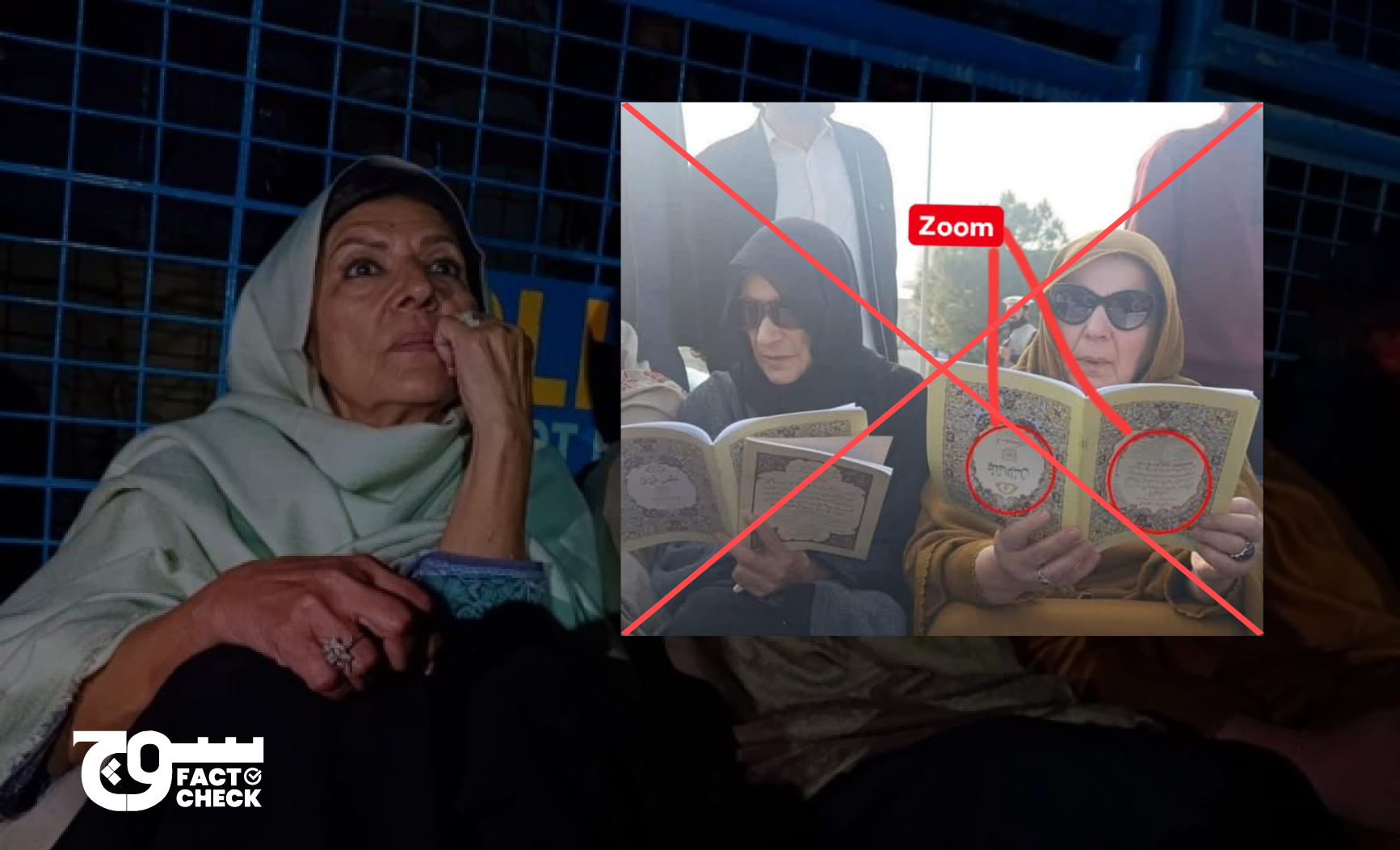
Claim: An image shows Noreen Niazi Khan holding the Holy Quran upside down during a recitation.
Fact: The viral image is edited.
On 4 February, Facebook user “Tigre Pmln” shared an image of PTI’s founder Imran Khan’s sisters Uzma Niazi and Noreen Niazi, holding a Quran upside down, with the caption: “استغفراللہ استغفراللہ
یہ بھی خود کو مسلمان کہتے ہیں۔
یوتھیوں کی آپا نے سپارہ ہی الٹا پکڑا ہوا ہے۔
قبول کیسے ہو گی قرآن خوانی۔”
[Translation: Astaghfirullah, Astaghfirullah.
They call themselves Muslims.
The youth’s ‘apa’ (elder sister) is even holding the Siparah (a section of the Qur’an) upside down.
How will the Qur’an recitation be accepted?]
Fact or Fiction?
Since the viral image contained red markings, Soch Fact Check conducted a reverse- image search to trace its earliest appearance online. While the initial results primarily showed the same red-marked image being reshared alongside the claim, we eventually located a post by Chaudhary Mudassar Raza Machiana, a member of Pakistan Tehreek-e-Insaf, dated 3 February 2026. The caption read: “اڈیالہ جیل کے باہر قران خوانی شروع ہو گئی ہے”
[Translation: Quran recitation has begun outside Adiala].
This appears to be the earliest instance of the image shared online. It was reshared across social media platforms.
The version carrying the viral claim began circulating on 4 February 2026. This suggests that the later version was likely altered before being reshared.
A side-by-side comparison of both images shows they are identical in composition, background, lighting, and positioning, with one key difference:; in the viral version, Noreen Niazi appears to be holding the Quran upside down. No other visual elements differ between the two images, indicating that only this specific portion was modified rather than the entire image being recreated.
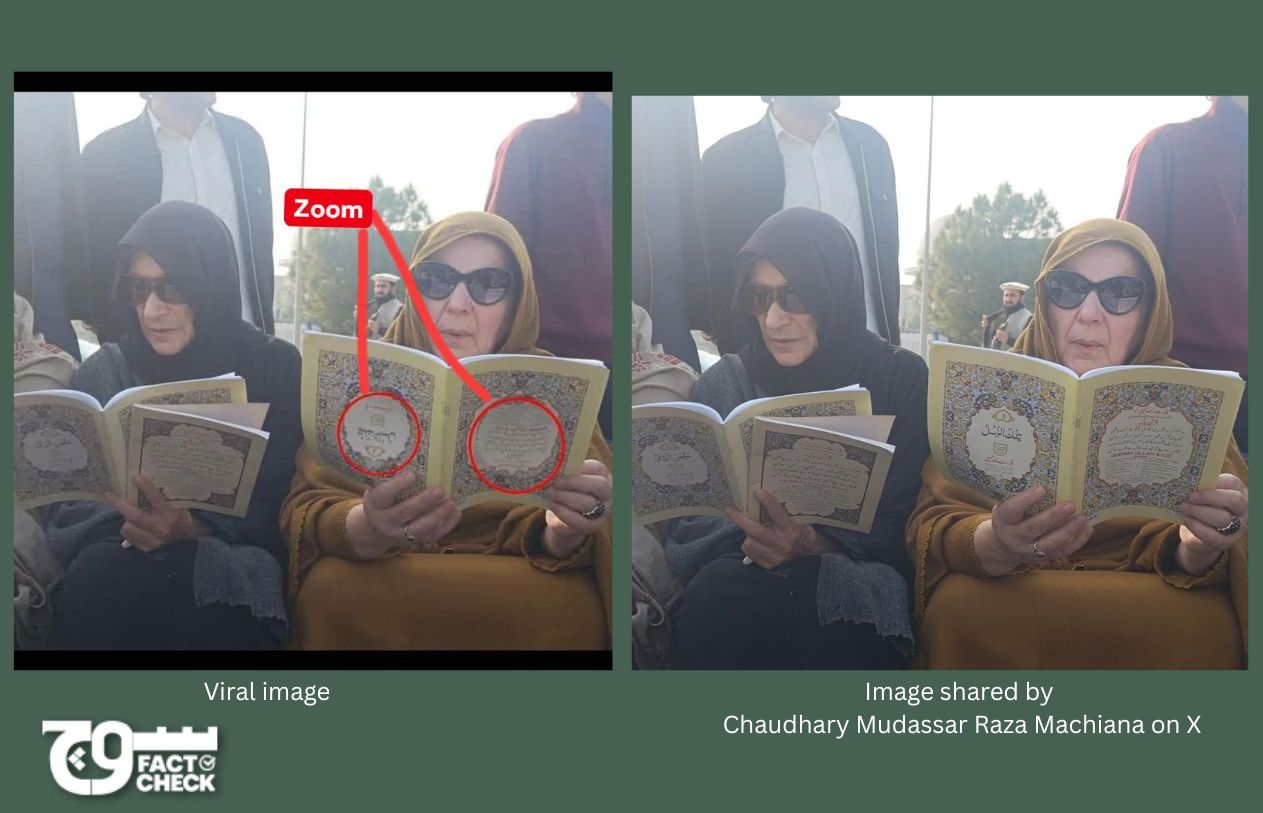
Comparison of the viral image with the image shared on X
We also analysed both versions using Scanly.co, which is an online photo authenticity tool that analyses an image’s metadata, timestamps, compression patterns, and file structure to identify signs of editing or recompression. The viral image received an 80% authenticity rating and generated a warning under EXIF metadata stating: “EXIF present but no camera info,” meaning the file contained metadata but lacked original device details. This is a common sign of re-saving or processing. The tool detected no editing software and marked timestamps as valid (dated 18 February 2026, 11:16:55), but flagged compression quality with a warning. This indicates that the image had been recompressed. Recompression is consistent with an image being modified and then re-exported.
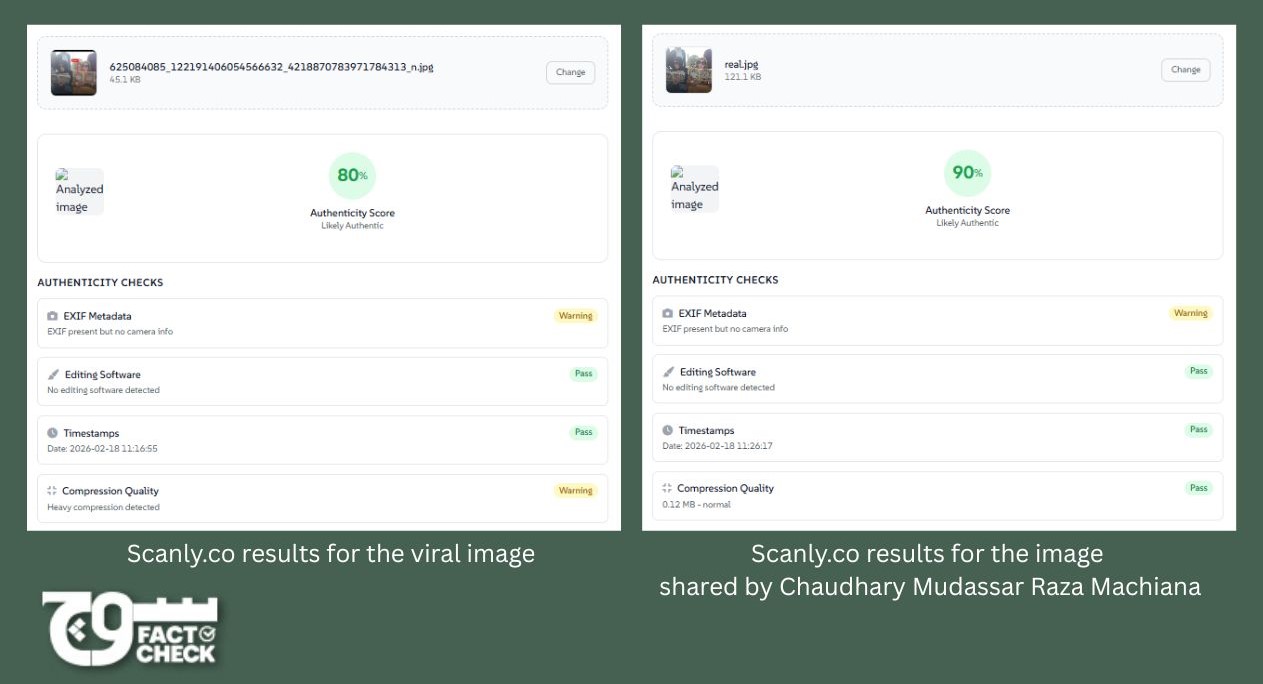
Scanly.co results
When the original image was analysed, the authenticity checker again showed: “EXIF present but no camera info” and detected no editing software, but the compression quality passed without warning. Its timestamp (18 February 2026, 11:26:17) also differed slightly. The absence of a compression warning in the original, compared to the warning in the viral version, suggests the viral image underwent an additional modification step.
Soch Fact Check also analysed both versions of the image using Fake Image Detector, an online forensic tool that evaluates metadata consistency, compression artifacts, noise patterns, and potential artificial alterations within an image.
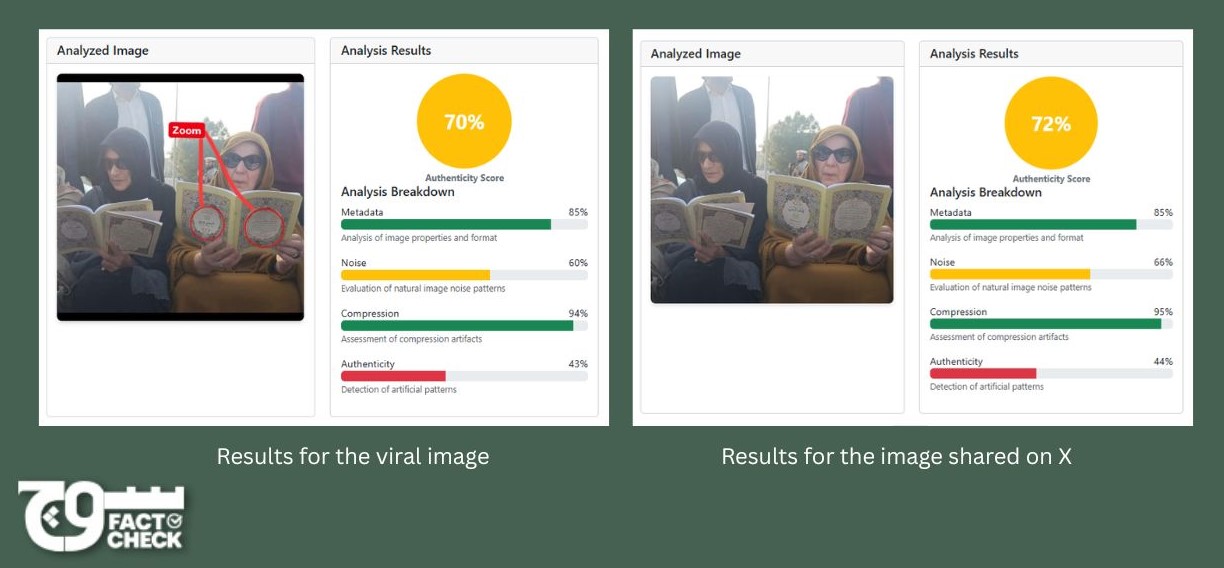
Fake Image Detector results
The viral image received an overall authenticity score of 70%. A breakdown of the analysis showed a metadata score of 85%, indicating that the file’s basic properties and format appeared structurally consistent. However, the noise analysis scored 60% suggesting irregularities in natural image grain patterns, which can sometimes occur when a specific area of an image has been altered and then re-saved. The compression assessment scored 94% meaning the image’s compression artifacts appeared largely uniform across the file. Notably, the authenticity detection score was 43% reflecting the tool’s identification of artificial or inconsistent visual patterns within the image. Lower authenticity scores in this category can indicate localised editing or digital manipulation.
We then analysed the version of the image shared on X. This version received a slightly higher overall authenticity score of 72%. Its metadata score remained consistent at 85% suggesting no structural irregularities in file properties. The noise analysis improved slightly to 66%. The compression score was 95%, indicating consistent compression artifacts across the image. The authenticity detection score rose to 44%.
Given that the unaltered image was posted before the viral version and forensic results’ indication about potential manipulation, we can conclude that the viral image is likely edited.
Virality
The viral image was shared on Facebook here, here, here, here, here, and here. Archived here, here, here, here, here, and here.
On Instagram, it was shared here, here, here, here, and here. Archived here, here, here, here, and here.
Conclusion: The viral image showing Noreen Niazi holding the Holy Quran upside down is edited. An unaltered version of the image appeared online on 3 February whereas the viral image was shared on 4 February. Additionally, photo authenticity tools flagged the viral image as manipulated.
–
Background image in cover photo:
To appeal against our fact-check, please send an email to appeals@sochfactcheck.com