
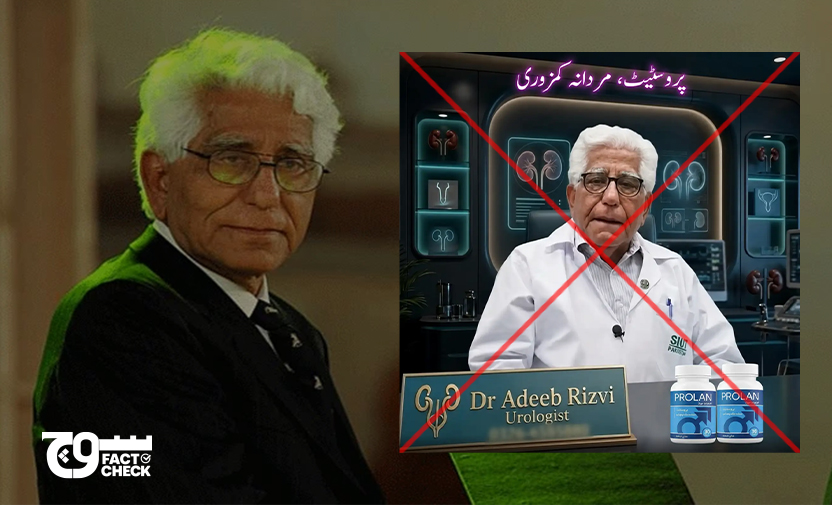
Claim: Dr Adib Rizvi has endorsed Prolan, a product marketed for prostate-related and sexual health problems.
Fact: SIUT says Dr Rizvi has never endorsed Prolan. Soch Fact Check traced the footage to an unrelated interview and found evidence of likely AI-generated or manipulated speech.
On 11 May 2026, a Facebook page named “Prolan-Adeeb Rizvi” posted an apparent video of Dr Adeeb Rizvi, founder of the Sindh Institute of Urology and Transplantation (SIUT) and Pakistan’s top renal surgeon, promoting Prolan, a product sold online as a purported herbal treatment for prostate enlargement, urinary symptoms, and sexual health problems, with orders placed through telephone or WhatsApp.
The Urdu-language caption accompanying the video claims the product can treat an enlarged prostate, frequent or interrupted urination, a burning sensation while urinating, joint and back pain, erectile difficulties, low sexual desire, low sperm quantity, and problems with sexual timing. It also claims that Dr Adib Rizvi developed Prolan, describing it as an entirely herbal product with no side effects.
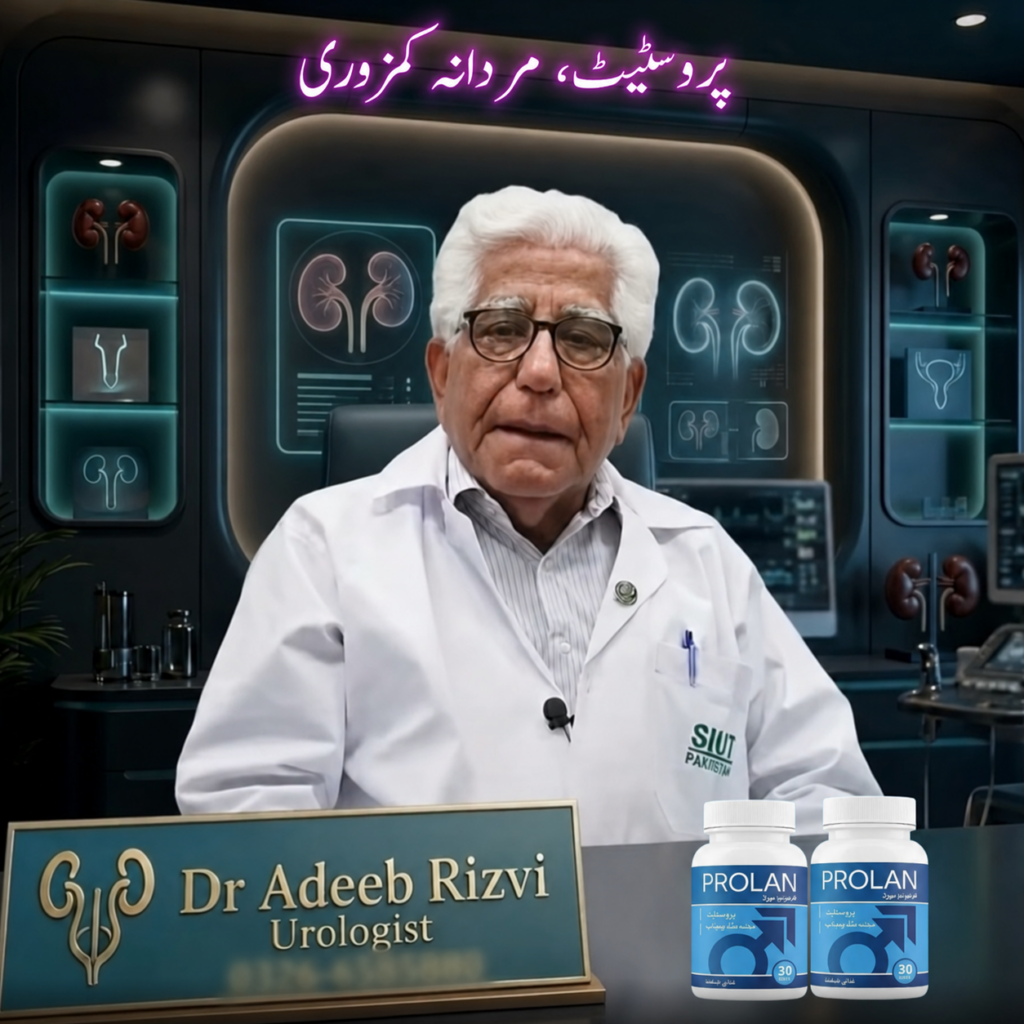
A screenshot from the manipulated advertisement falsely presenting Dr Adeeb Rizvi as endorsing Prolan
In the video, a man presented as Dr Rizvi lists several urinary and sexual health problems before claiming:
“ان تمام مسائل کے لیے میں نے پرولان تیار کیا ہے، جو صرف 14 دن میں آپ کو 100 فیصد تک فائدہ دیتا ہے، بغیر آپریشن اور بغیر مہنگے علاج کے۔ بس دن میں دو بار، صبح اور شام، اس کا استعمال کرنا ہے۔”
[Translation: “I developed Prolan for all these problems. It provides up to 100% benefit in only 14 days, without surgery or expensive treatment. It only needs to be used twice a day, in the morning and evening.”]
The voiceover in the video claims users will experience relief in less than a week, regain control over urination, and recover from sexual health problems. It further claims everyone who has used Prolan has fully recovered and that there has not been a single case of failure in recent years.
The video ends by instructing viewers to call or send a WhatsApp message to the displayed number and provide their name, telephone number, and complete address. It claims that the product will be delivered through TCS within two or three days and that customers can pay after receiving it.
This fact-check addresses claims linking Dr Rizvi to the development or endorsement of Prolan. It does not assess whether the product is registered, safe, or effective.
Dr Rizvi targeted by health misinformation before
This is not the first time public health-related misinformation has been falsely attributed to Dr Adib Rizvi.
In August 2025, we fact-checked an audio recording that falsely claimed Dr Rizvi had discouraged people from taking blood pressure medication and promoted an unnamed natural remedy. The investigation found that the audio was synthetic and likely generated using artificial intelligence (AI) tools.
The article also documented earlier false claims attributed to Dr Rizvi, including claims about a supposed diabetes medicine launched under his supervision and fabricated health advisories concerning tea and soft drinks.
The current videos differ from those earlier examples because they promote a product named Prolan for prostate-related and sexual health problems. The post also directs viewers to different telephone and WhatsApp numbers to place orders.
Fact or Fiction?
SIUT denies any association between Dr Rizvi and Prolan
The Sindh Institute of Urology and Transplantation (SIUT) issued a public warning on 28 July on its official Facebook page about videos and advertisements falsely using Dr Adib Rizvi’s name to promote medicines, including Prolan.
The statement said Professor Rizvi has never endorsed, promoted, advertised, or authorised the sale of any medicine, supplement, or commercial product. It also denied any connection with the videos, advertisements, websites, telephone numbers, or individuals using his name.
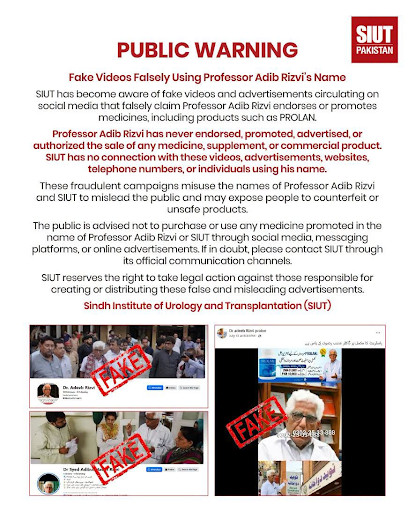
SIUT’s public warning states that Dr Adeeb Rizvi has never endorsed Prolan or any other commercial product.
The warning specifically identifies Prolan as one of the products promoted through the advertisements. This directly contradicts the claim being fact-checked, which presents Dr Rizvi as the person who developed and recommends the product.
SIUT further advised people not to purchase or use medicines promoted in Dr Rizvi’s or the institute’s name through social media, messaging platforms, or online advertisements. It warned that such campaigns may mislead people and expose them to counterfeit or unsafe products.
However, SIUT’s warning does not independently establish that every product sold under the name Prolan is counterfeit or unsafe. The evidence confirms that the endorsement attributed to Dr Rizvi is false.
Videos use Dr Rizvi’s identity to sell Prolan
Soch Fact Check reviewed multiple versions of the advertisements on Facebook, Instagram, and Threads. Although they use different scripts, footage, and telephone numbers, they promote the same product for prostate-related and sexual health problems while presenting Dr Rizvi as its developer or endorser.
The advertisements instruct viewers to call or send a WhatsApp message, provide their contact details and address, and pay after receiving the product. The false association with Dr Rizvi is central to the sales pitch.
Advertisement reuses footage from unrelated interview
Soch Fact Check conducted a reverse-image search using a keyframe from the circulating advertisement. The results led to a YouTube video titled “Dr Adib Rizvi interviewed”, uploaded by SIUT Pakistan on 2 December 2019.
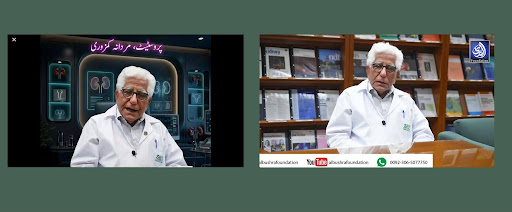
Circulating advertisement, left, and original interview, right
In this interview, Dr Rizvi discusses healthcare and education as basic human rights, SIUT’s expansion, the management of zakat and donations, its partnership with the government, and medical guidance for patients who fast during Ramazan.
He also addresses false medical advice previously attributed to him on social media. At approximately 5:10, Dr Rizvi says he has never issued statements endorsing or advising against specific commercial drinks and that his general advice is to drink clean water.
Dr Rizvi does not mention Prolan, claim that he developed the product, or recommend it for prostate-related or sexual health problems at any point in the interview.
A comparison between the keyframes of the two videos shows Dr Rizvi wearing the same white coat, striped shirt, glasses, lapel pin, pen, and microphone in both videos. His facial features, posture, and movements also match, while the background in the advertisement has been replaced.
The comparison indicated that the advertisement reused footage from the original interview and manipulated it to make Dr Rizvi appear to promote Prolan. At this stage, the evidence did not establish whether the alteration was limited to the speech or also included AI-generated lip movements and other visual changes.
Visual and AI detection analysis
Before using automated detection tools, Soch Fact Check examined the visual characteristics of the advertisement. Dr Rizvi appears against a digitally rendered medical-themed background that is absent from the 2019 interview. His clothing and overall appearance closely match the original recording, but the edges around his hair and shoulders appear unusually smooth against the replacement background. At several points, his mouth and facial expression change while his head and upper body remain comparatively rigid.
These visual features suggest that the 2019 interview may have been used as source or reference material. However, the comparison alone cannot establish whether the advertisement directly reused frames from the interview, synthetically recreated Dr Rizvi’s appearance, or combined authentic and generated material.
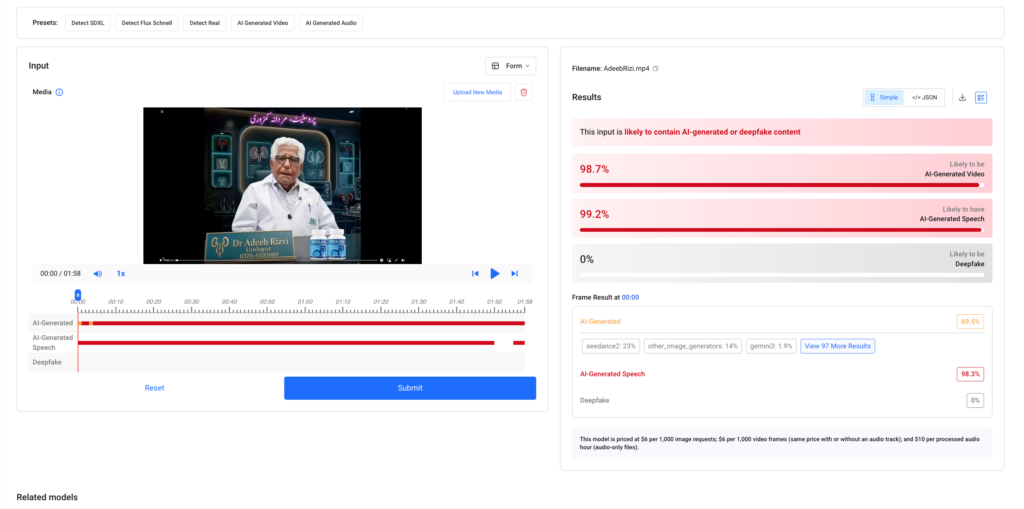
Hive Moderation assessed the video as 98.7% likely to be AI-generated and the speech as 99.2% likely to be AI-generated. Its separate deepfake classifier returned 0%.
The 0% deepfake score does not establish that the advertisement is authentic, as Hive Moderation uses separate classifiers to assess different forms of synthetic or manipulated media. The reverse image search linked the advertisement to the authentic 2019 interview but did not determine how the visuals in the circulating version were produced.
Taken together, the visual similarities and Hive Moderation results suggest that the original interview was likely used as source or reference material and that both visual and audio elements may have been manipulated or generated.
Circulating advertisement, left, and original interview, right
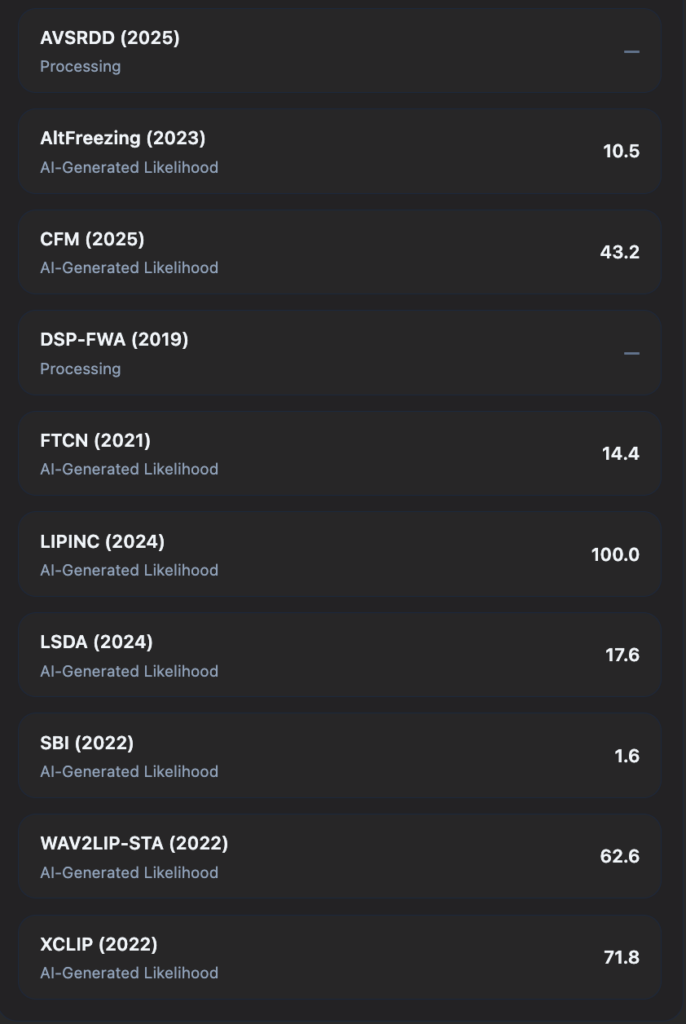
Soch Fact Check also tested the video using DeepFake-O-Meter, an open platform developed by the University at Buffalo’s Media Forensics Lab. The video was run through nine detectors: LIPINC, WAV2LIP-STA, DSP-FWA, XCLIP, CFM, LSDA, FTCN, AltFreezing, and SBI. These models were selected because the visual comparison and Hive Moderation results indicated possible manipulation of both Dr Rizvi’s facial movements and speech. Together, they assess several relevant forms of alteration, including lip-sync manipulation, face-warping, blending artefacts, and inconsistencies across frames.
LIPINC and WAV2LIP-STA assess signs associated with manipulated mouth movements. DSP-FWA looks for face-warping artefacts, while XCLIP analyses visual patterns across frames. CFM and LSDA assess broader face-forgery patterns, FTCN examines temporal consistency, AltFreezing analyses spatial and temporal artefacts, and SBI looks for blending-related inconsistencies.
The models returned mixed results. LIPINC returned 100%, DSP-FWA 76.3%, XCLIP 71.8%, and WAV2LIP-STA 62.6%. These results support possible manipulation of both the mouth movements and wider visual elements.
The remaining models returned lower scores: CFM 43.2%, LSDA 17.6%, FTCN 14.4%, AltFreezing 10.5%, and SBI 1.6%. These lower scores do not establish that parts of the video are authentic. They indicate only that those detectors did not strongly identify the specific signs of manipulation they were designed to detect.
Because the models assess different forms of manipulation and returned mixed results, Soch Fact Check considered their findings alongside Hive Moderation, the reverse image search, and the comparison with the 2019 interview. Taken together, the evidence indicates that the advertisement likely contains manipulated or generated visual and audio elements. However, it does not establish whether the advertisement directly reused frames from the interview, synthetically recreated Dr Rizvi’s appearance, or combined both methods.
DeepFake-O-Meter returned mixed results across nine detection models
Because the tools assess different forms of manipulation and return mixed results, Soch Fact Check considered their findings alongside the reverse-image search and comparison with the 2019 interview. SIUT’s warning independently established that Dr Rizvi had not endorsed Prolan.
Taken together, the close visual similarities with the 2019 interview, Hive Moderation’s assessment of both the video and speech, and the higher scores from DeepFake-O-Meter’s lip-sync and visual-manipulation detectors indicate that the advertisement likely contains manipulated or generated visual and audio elements. The original interview was likely used as source or reference material, although the available evidence does not establish whether the advertisement directly reused and altered its frames, synthetically recreated Dr Rizvi’s appearance, or combined both methods.
Virality
The claim appeared on Facebook, Instagram, and Threads. Soch Fact Check identified at least 29 Facebook posts using Dr Adeeb Rizvi’s identity to promote Prolan.
As of 30 July 2026, the Facebook posts had collectively received at least 28,928 reactions, 474 comments, and 465 shares, based on figures recorded at that time by Soch Fact Check. One post had received 184,000 views. The three posts with the most reactions had approximately 7,700, 3,100, and 1,400 reactions, respectively.
The videos used different scripts and telephone numbers but promoted the same product for prostate-related and sexual health problems. Several posts featured similar footage, captions, product images, and contact details. However, Soch Fact Check could not independently establish whether the accounts were operated by the same individual or organisation.
Conclusion: Videos of Dr Adib Rizvi endorsing Prolan are fake. SIUT denied any association, while Soch Fact Check traced the footage to an unrelated interview and found evidence of likely AI-manipulated speech.
To appeal against our fact-check, please send an email to appeals@sochfactcheck.com